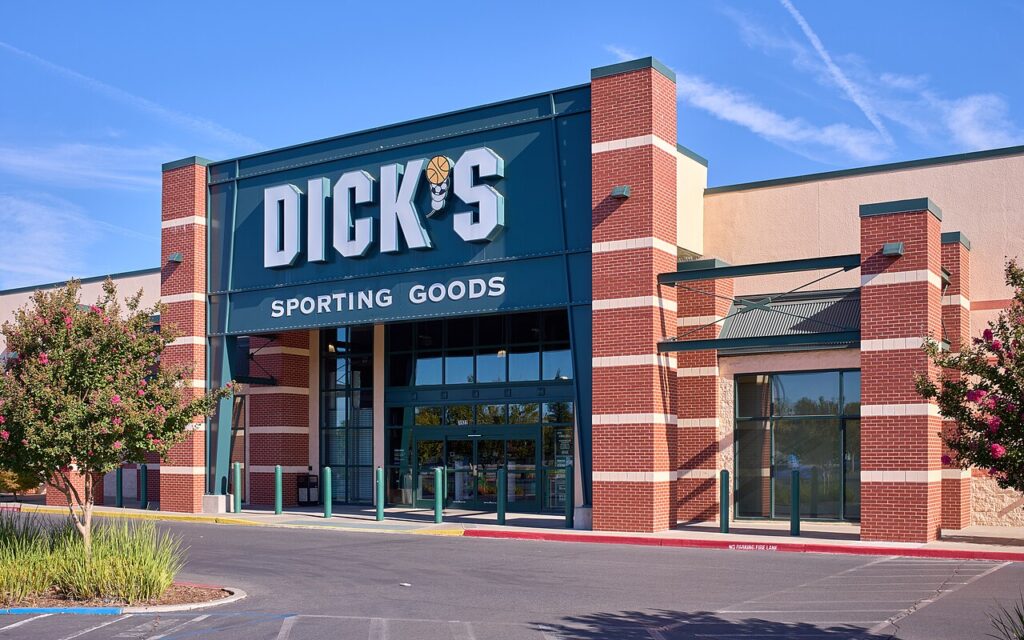
On August 25, 2026, Dick’s Sporting Goods released its fiscal Q2 2027 earnings
Dick’s Delivered a mixed performance that immediately rattled the athletic retail sector. While the company posted strong top‑line growth, profitability fell short of expectations due to a sharply more promotional footwear environment, underperforming launches, and ongoing struggles at Foot Locker. The results triggered a steep sell‑off not only in Dick’s stock but across major athletic brands, including Nike.
This in‑depth analysis breaks down Dick’s earnings, the footwear slowdown, and what these trends could mean for Nike stock moving forward. The article is structured for maximum SEO performance and formatted cleanly for WordPress publishing.
Strong Revenue Growth, Weak Profitability
Dick’s Sporting Goods reported revenue of $5.59 billion, missing expectations of roughly $5.64–$5.65 billion. Earnings per share came in at $3.53, below analyst estimates of $3.76–$3.79. Despite the miss, revenue grew an impressive 53.2% year‑over‑year, driven largely by the company’s acquisition of Foot Locker.
Comparable sales for Dick’s core business rose 4.9%, showing that the company’s main operations remain healthy. However, Foot Locker’s performance dragged down the overall results, with pro forma comps falling 3.6% and the segment posting a $31.9 million operating loss.
The combination of strong sales but weaker profitability highlights a major challenge facing the athletic retail industry: margins are under pressure, and footwear is the primary culprit.
Footwear Weakness: The Central Problem
The most important takeaway from Dick’s earnings call was the clear and repeated emphasis on footwear softness. Management cited several issues:
- Fewer footwear launches during the quarter
- Underperforming retro releases
- A highly promotional marketplace forcing heavy discounting
- Elevated inventory levels across the sector
Executive Chairman Ed Stack noted that the lack of compelling new footwear releases significantly hurt sales and margins. Retro products, which typically drive strong demand, also underperformed. This is a major red flag for brands like Nike, which rely heavily on retro drops and seasonal launches to fuel revenue.
Perhaps the most concerning detail was Dick’s warning that the promotional environment will continue through at least Q4, with Q3 expected to be the most margin‑pressured quarter of the year. This means retailers will continue discounting footwear heavily, which directly impacts Nike’s wholesale revenue and brand positioning.
Foot Locker’s Struggles Add More Pressure
Foot Locker, now under the Dick’s umbrella, remains a weak spot. The segment posted negative comps and a sizable operating loss. International comps were even worse, falling more than 10% in some regions.
Foot Locker’s business model relies heavily on legacy footwear and retro launches—exactly the categories currently underperforming. As a result, Foot Locker’s challenges amplify the broader footwear slowdown and create additional headwinds for Nike, one of its largest suppliers.
Dick’s Cuts Full‑Year Guidance
In response to margin pressure and footwear weakness, Dick’s lowered its full‑year guidance:
- EPS reduced from $13.27–$14.27 to $10.94–$11.94
- Non‑GAAP EPS lowered to $11–$12
- Net sales guidance trimmed to $21.9–$22.2 billion
The EPS cut of more than $2 per share was one of the most alarming parts of the report and contributed heavily to the stock’s sharp decline.
Market Reaction: A Sector‑Wide Sell‑Off
The market responded swiftly and aggressively:
- Dick’s Sporting Goods stock fell ~25%
- Nike dropped ~3%
- Lululemon fell ~4%
- On Holding declined ~2%
This broad sell‑off shows how interconnected the athletic retail ecosystem is. When Dick’s warns about footwear softness, investors assume Nike will feel the impact—and they’re usually right.
What the Footwear Decline Means for Nike Stock
Nike has already been under pressure throughout 2026. The stock is trading near 12‑year lows, hovering around the high $30s. Analysts have warned that Nike may fall below $30 if the company cannot stabilize its product pipeline and wholesale partnerships.
Dick’s earnings report adds fuel to those concerns.
Nike’s Wholesale Pivot Makes Dick’s Results More Important
After years of prioritizing direct‑to‑consumer sales, Nike has shifted back toward wholesale partners like Dick’s and Foot Locker. This means Nike is more exposed to the performance of these retailers than it was in previous years.
When Dick’s reports weak footwear demand, Nike’s wholesale sell‑through rates decline. Retailers respond by discounting Nike products, which hurts Nike’s margins and brand perception.
Underperforming Launches Suggest Nike’s Product Cycle Is Weak
Dick’s specifically cited underwhelming new product introductions and weak retro performance. Nike is one of the largest suppliers of both categories. If launches underperform, Nike faces:
- Higher inventory levels
- More discounting
- Lower margins
- Slower revenue growth
This is exactly the pattern analysts have been warning about for months.
Technical Indicators Suggest More Downside for Nike
Nike’s technical setup remains bearish:
- Trading below major moving averages
- RSI near 32 (not yet oversold)
- ADX above 30, indicating strong downward momentum
Combined with Dick’s footwear warning, Nike’s stock may continue to struggle until the company demonstrates a stronger product cycle.
Long‑Term Outlook: Can Nike Recover?
Nike’s brand remains strong, but the path forward is challenging. The company must address several key issues:
1. Fix the Product Pipeline
Nike needs compelling new footwear releases that resonate with consumers. Retro drops alone are no longer enough to drive growth.
2. Stabilize Wholesale Partnerships
Weakness at Dick’s and Foot Locker directly impacts Nike’s sell‑through rates. Nike must work closely with retailers to improve inventory management and launch execution.
3. Improve Inventory Discipline
High inventory levels across the sector mean Nike must reduce production and avoid flooding the market with product that ends up discounted.
What Investors Should Watch Next
Several upcoming events will determine Nike’s trajectory:
- Nike’s September 29, 2026 earnings report
- Holiday footwear launches
- Dick’s Q3 and Q4 results
- Foot Locker’s turnaround progress
If Nike’s holiday launches underperform, the stock could face another leg down.
Conclusion: Dick’s Earnings Reveal a Footwear Problem That Could Hurt Nike Stock Further
Dick’s Sporting Goods’ August 25, 2026 earnings report paints a clear picture: footwear demand is weakening, launches are underperforming, retailers are discounting heavily, and inventory levels remain elevated. Foot Locker’s struggles add more pressure, and Dick’s lowered guidance signals that these challenges will persist into late 2026.
For Nike, the implications are significant. With the stock already near multi‑year lows and analysts warning of further downside, Dick’s earnings serve as a warning that Nike’s challenges may continue unless the company can reinvigorate its product pipeline and stabilize wholesale partnerships.
Investors should watch Nike’s upcoming earnings closely, as well as holiday footwear performance, to determine whether the company can reverse the current trend. For more stock earnings info check out our articles! Market Mojo!